
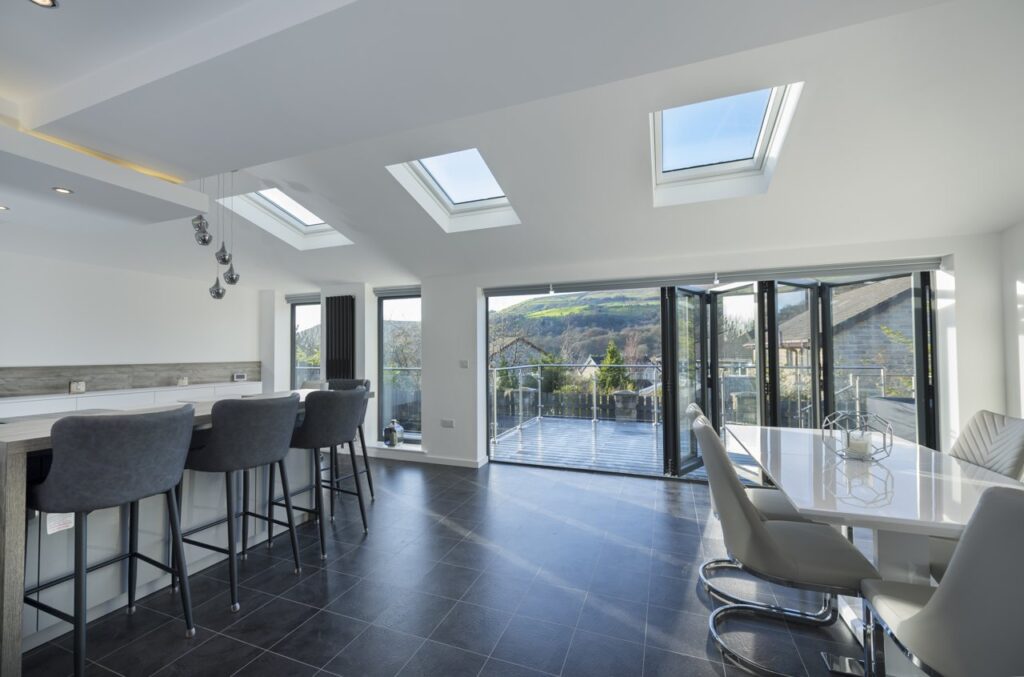
Here we look at the different materials used in construction
of solid roofs and the pros and cons to each of them.
Within our sector, Aluminium is the most popular material
choice for solid roof construction for a variety of reasons, the main one being
its’ lightweight nature makes the material easier to handle over other
materials like steel.
It is also stronger than timber or GRP, so aluminium will
span further and is more suited to larger structures particularly where bigger
openings for doors are incorporated. Therefore, aluminium is more suitable
with designs associated with the replacement conservatory roof sector.
Aluminium is also more stable than timber, it doesn’t absorb
moisture and is therefore not prone to over expansion and contraction, or
indeed distortion through this process, a particular issue with cold roof
construction. Longevity of the material far exceeds timber as aluminium will
not rot or decay. Aluminium also has greater screw retention, ensuring no over
fixing or pull through of fixings during installation which is common with GRP.
These are the main reasons why aluminium is by far the most
popular material used in solid roof construction.
Timber is structurally weaker than aluminium. Therefore,
when using timber much deeper sections are required making the roof very bulky.
This limits the ability to have the top layer of insulation above the timber
frame, as commonly seen with house roof construction. This means that
most timber framed roofs tend to be a cold roof construction and not a warm
roof construction in order to keep the overall depth of the roof to a
workable height.
Timber is commonly available, cheap and can be easily
modified making this the most common material in house roof construction, but
adequate ventilation is required to avoid condensation, which would lead to
roof failure – interstitial condensation is a real problem particularly in
‘cold roof’ designs, as described in our earlier articles, this will build up
over time without the homeowner being aware until often it is too late. Timber
is absorbing and releasing moisture all the time, and so will expand and
contract depending on the environmental changes. Moisture retention leads to
condensation and the lack of ventilation will mean it can’t escape and caused
rot, with many installers offering a minimum 10-year product guarantee, this
may be a ticking time bomb for some.
Excessive timber movement may also result in plaster
cracking over time. This is more relevant in single storey extensions where
vaulted ceiling are most common in design. Aluminium due to its’ nature will
prevent this movement ensuring a rigid structure.
The Prefix WARMroof® is
a true warm roof and is built around an aluminium chassis (framework),
this results in a very strong, stable and robust structure which also allows
our customers to use not only lightweight roof tiles, but the much heavier
traditional slate or concrete tile finish. The Prefix WARMroof® is
strong enough to take those additional loads as well as still being a
lightweight, configurable roof system.
Aluminium is also extremely environmentally friendly, being
the 3rd most abundant element on the planet with over 70% of that material in
use in the UK is from recycled aluminium. So this ‘Green’ material has the
added bonus of benefiting the environment.
The original Prefix WARMroof® was
launched over 10 years ago and is now outperforming the product guarantees,
with roofs still looking as good as they did on the day they were first
installed. The use of aluminium within the structure will ensure that these
WARMroofs perform and are enjoyed for many years to come, other roofs simply
won’t.